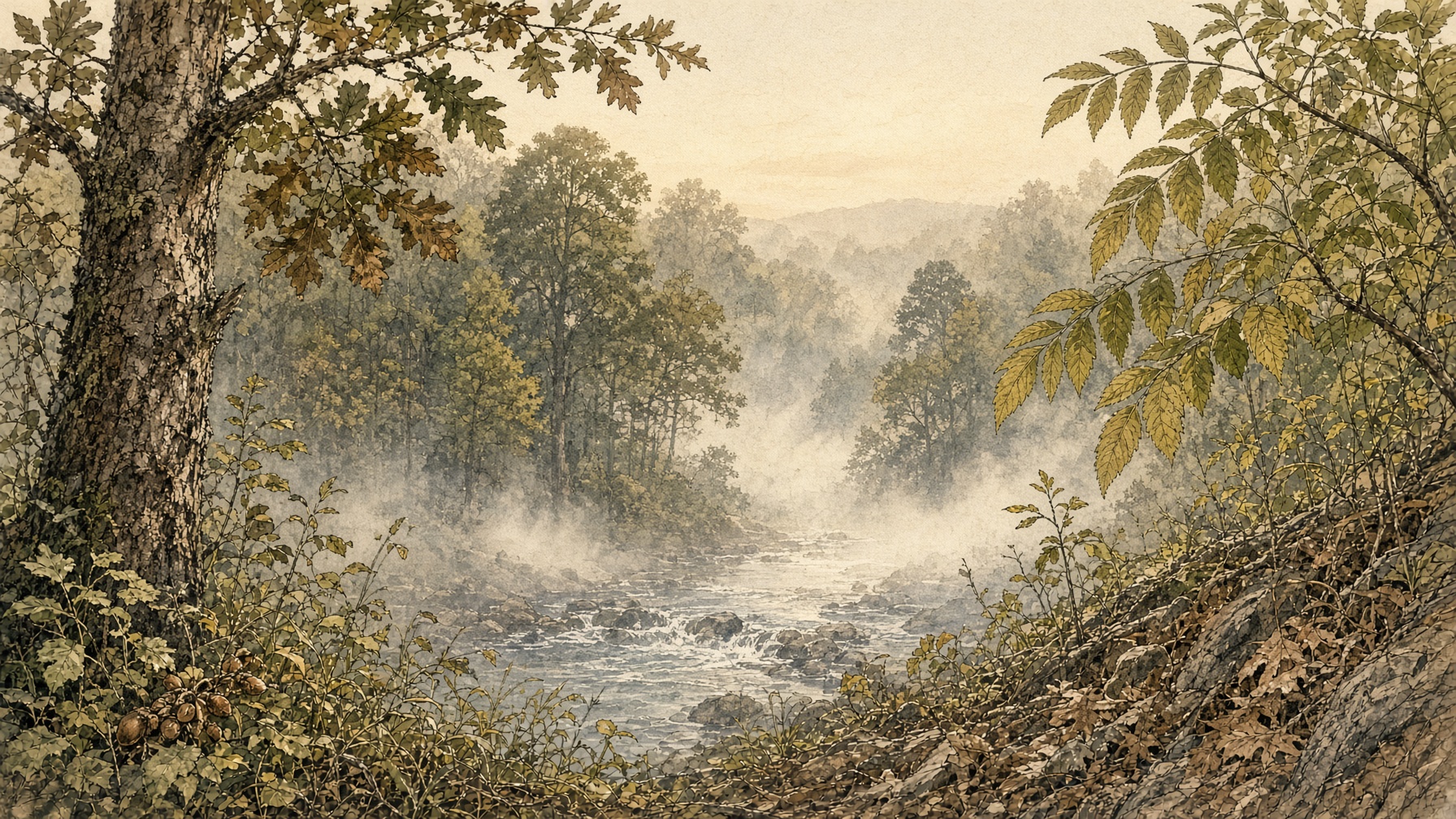
Weather that runs this county
Flood, ice, tornadoes, and the fronts that move deer and fish. Read the sky before you leave the porch.
What this valley does
Dearborn County sits where Gulf moisture meets polar air. We get ice storms, flash floods, humid 95°F Julys, and January nights to −10°F. The Ohio and Laughery flood on a regular schedule of irregular dates. Fog in the river bottoms at dawn is normal. Lightning on a ridge in July is not a place to be the tallest object.
| Pattern | What you do |
|---|---|
| North / west cold front after a muggy spell | Best deer movement of the week. Fish the creek as it drops and clears. |
| Three still, warm nights in November | Deer go nocturnal. Sit midday funnels or wait for the front. |
| Hard rain, then a 6-inch drop on Laughery | Smallmouth day. Mud line on the Ohio is a catfish edge. |
| Ice storm / freezing rain | Stay off the roads. Bring in extra wood. Livestock water will freeze in an hour. |
| River flood / flood watch | Move seed, tools, and the medicine box above the cellar stain. Do not drive dipped roads. |
| Tornado watch, green-black sky, hail | Lowest interior room, not a sycamore bottom. These hills get spin-ups in spring and late summer. |
| Heat index 100°F+ | Hunt and cut wood at dawn only. Pond-fish evenings. Shade and salt the crew. |
| Fog in the bottoms at daylight | Normal. Sound carries. Sit still. Drive slow on US-50. |
Flood
Floodwater is sewage, ag runoff, and drowned tanks. Do not drink it. Do not let kids swim it. When it goes down, lime the mud out of the well-house and shock the well if you know how.
Laughery comes out of its banks after a slow winter rain on frozen ground, or a summer cloudburst upstream in Ripley County. The Ohio backs into the mouths of the creeks and can hold flood water for days. If your garden is in the bottom, it is a bet, not a plan. Keep the staple beds on the upland clay.
Never walk a flooded road to see. Culverts wash. A stick you cannot see will take a truck.
Winter that kills
The dangerous week is not the 10°F sunny day. It is the 32°F ice storm that takes the power and the trees, then the 5°F night after. Pipe freeze, chimney fire from wet wood, and carbon monoxide from a generator in a garage.
Deer yard on south slopes and in cedar thickets. A late-January still hunt after a snow is honest hunting. So is leaving them alone if you already have meat in the cellar.
Note. A board on the porch with a cup of water tells you freeze better than a phone app. If the cup is ice at dawn, the chicken water is too.
Reading a day without a forecast
- 1.Dawn sky: red in the east with a falling glass (or your ears popping, or smoke flattening) often means weather in 12–24 hours.
- 2.Wind shift from south/southwest to west/northwest is the cold front. Hunt that evening and the next morning.
- 3.Swallows and swifts working low, or a sudden hush of insects, often means rain inside an hour.
- 4.Halo around the moon in winter: moisture, often a warm-up then a storm.
- 5.If you can hear the river or the highway louder than usual, the air is heavy — rain or fog.