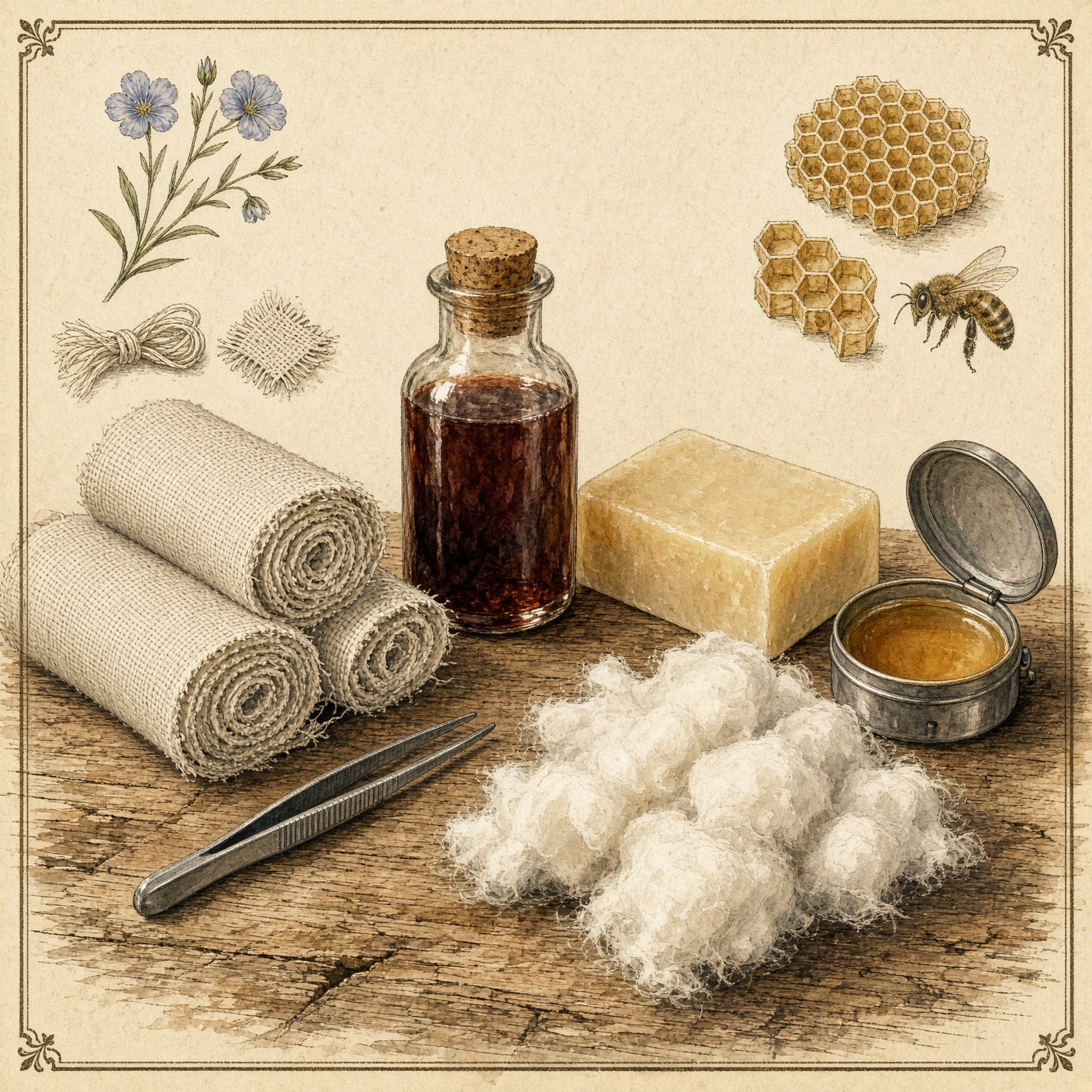
The medicine chest
What to put in a Dillsboro kitchen box now, while the drugstore still opens.
Buy these while you can
| Item | Why |
|---|---|
| CAT or SOF-T tourniquet (two) | Belt-and-stick is a last resort |
| Israeli or emergency pressure bandage | One-handed pressure on a deer-camp cut |
| Gauze rolls, 4x4s, a roll of tape, triangle bandages | Everything else |
| Nitrile gloves, a bottle of soap, saline or a squeeze bottle | Wash the wound |
| Tweezers, trauma shears, a good light | Ticks, hooks, clothes |
| SAM splint + elastic wraps | Ankle, wrist, forearm |
| Oral rehydration packets, or sugar + salt you have counted | Gut and heat |
| Acetaminophen, ibuprofen, diphenhydramine (Benadryl) | Fever, pain, itch, mild allergy |
| Aspirin (low-dose), not expired | Chew for a suspected heart attack in an adult |
| Loperamide, bismuth, a thermometer | Gut, and knowing the number |
| Their real prescriptions — 90 days if the doctor will | Blood pressure, thyroid, insulin, inhalers, EpiPens (two) |
| Honey, petroleum jelly, moleskin | Shallow burns, lips, blisters |
| N95 or a stack of clean cloth masks | Sick-care without sharing it |
Note. Put the kit in a labeled dry box above the cellar flood line. A kit in the truck and a kit in the kitchen. Teach one other person where it is and how the tourniquet clicks.
Talk to a doctor now
If you have a family doctor, ask — while appointments exist — about a written plan: extra epinephrine, extra inhalers, what to do if insulin runs out, and whether a short course of a named antibiotic for a named infection belongs in your box. Do not start a random leftover ‘just in case.’ Do not share blood-pressure pills like candy.
Learn one skill with your hands this year: a tourniquet on a willing thigh, a pressure wrap, and how to wash a wound with a squeeze bottle. Reading is not the same as doing it in the yard.
What you already have in this house
| Kitchen / barn | Use |
|---|---|
| Boiled water, soap, clean cotton or linen | 90% of wound care |
| Honey | Shallow clean burns and cuts (not on infants, not in deep holes) |
| Salt + sugar | Rehydration mix |
| Vinegar | Cleaning surfaces, not open wounds |
| Superglue | Tiny clean slices on a finger — after washing — as a last lid. Never in the eye or a dirty bite. |
| Duct tape + cloth | Butterfly closure, splint wrap |
| Maxi pads (unopened) | Bleed pads. They were made for this shape of problem. |
| Headlamp | You will work at night |
Doses you should not guess
Expired is not always useless — many dry pills lose strength slowly — but tetracyclines that have gone bad can hurt kidneys, and liquid antibiotics are not a pantry item. When in doubt, do not give it. The wound-wash and the rehydration mix do not expire if the water is clean.
Read the bottle. Write the person’s weight on the kit lid. Child doses are by weight, not by ‘half an adult.’ Ibuprofen and acetaminophen can be staggered for a bad fever if you keep a paper log — they are not the same drug. Extra acetaminophen on a drinking liver, or extra ibuprofen on a bad kidney or an empty bleeding stomach, puts people in the ground.
Alcohol is not an antiseptic you pour in a hole, not a pain medicine, and not a warmer. Whiskey on a wound burns and does not clean. Whiskey in a hypothermic person opens the pipes and dumps their heat.
Keep a book
One notebook in the kit. Name, date, what happened, what you did, the time the tourniquet went on, the fever numbers. The next person who takes a shift can read. Future-you cannot remember a January night.