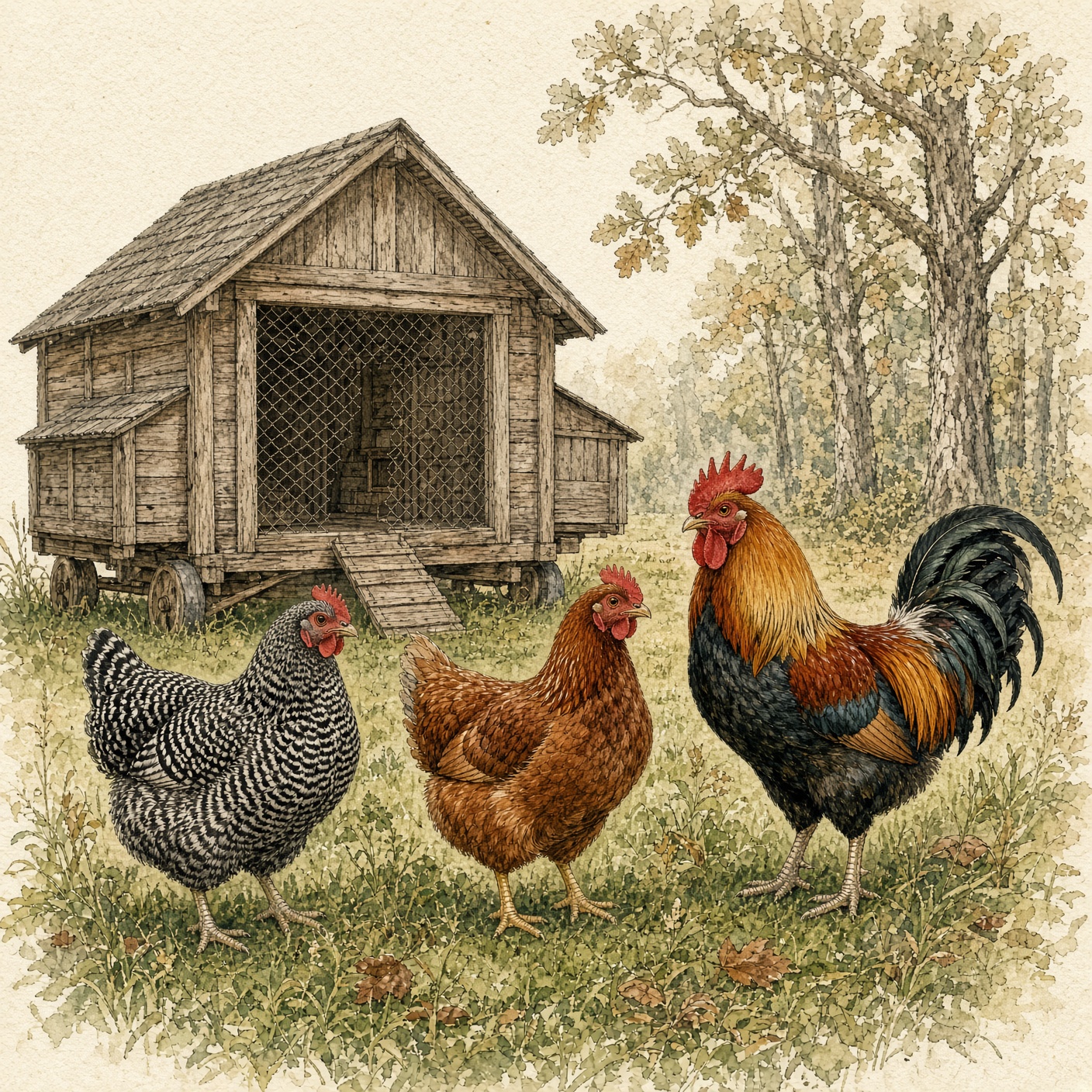
Eggs, meat, pest control
Chickens
Start here. A small flock is the fastest path to daily protein on a Dearborn County lot.
A closed coop with no high vent will frostbite combs and cause respiratory disease. Moisture kills, not cold.
Products: Eggs · Meat · Manure for compost · Feathers
- Start with
- 6–8 hens and no rooster if you only want eggs. Add a rooster only if you need fertile eggs or meat chicks. Dual-purpose breeds for this climate: Rhode Island Red, Barred Rock, Orpington, Australorp. They handle −10°F nights if dry and out of wind.
- Housing
- 4 sq ft inside per bird, 10 sq ft run. Nest boxes 1 per 4 hens, 18 in off the floor. Roosts 2 in wide, higher than nests (or they sleep in nests and dirty eggs). Hardware cloth 1/2 in, not chicken wire — raccoon hands go through chicken wire. A pop door you can latch from the house at dusk.
- Feed
- Layer mash ~18% protein, or mix: 2 parts cracked corn / dent corn, 1 part peas or roasted soy, plus greens, crushed eggshell, and meat scraps. Free range on a rotated yard cuts feed in half from May–October. They need grit (small gravel) and oyster shell in separate cups.
- Water
- Never let it freeze solid. In a grid-down winter, a rubber pan you dump and refill twice a day beats a fancy heater. Keep water out of the litter.
- Breeding
- A hen goes broody — she stays on the nest all day. Give her 8–10 fertile eggs, 21 days. Or use an incubator at 99.5°F, turn 3× daily, stop turning day 18, lock down humid. Cull extra roosters at 12–16 weeks for meat.
- Health
- Dry litter is 80% of health. Vent the coop at the top so moisture leaves and birds stay frost-free. Scaly leg mites: dunk legs in mineral oil. Sour crop: isolate, withhold feed, massage. Don’t use leftover antibiotics you don’t understand.
- Predators
- Night: raccoon, opossum, fox, coyote, weasel. Day: hawk, dog. Close the pop door every dusk. A livestock guardian or even a loud mutt changes the math. Buried apron of wire 12 in out stops digging.
- Harvest
- Broilers or surplus roosters at 12–16 weeks. Old hens (stew birds) at 2–3 years when laying drops. See Process → Chicken.
Eggs without a feed store
In a long emergency you will not have bagged layer mash. Chickens are omnivores. They need energy (corn, sorghum, wheat, squash seed), protein (worms, grubs, milk, meat scraps, peas, bugs you raise in manure piles), calcium (saved crushed shells, baked and ground), and greens (weeds, kale, comfrey).
Expect winter lay to crash as day length drops below 14 hours. That is normal. Don’t light the coop if power is precious — eat stored eggs (water-glassed) and meat birds instead.
Note. Water-glass eggs: fresh unwashed eggs submerged in a 1:10 pickling-lime (calcium hydroxide) solution in a crock. They keep 8–12 months in a cool cellar. Use only perfect, unwashed farm eggs.
First-week chick care
- 1.Brooder at 95°F week one, drop 5°F per week until feathered.
- 2.Water with marbles or pebbles so they don’t drown.
- 3.Chick-size crumble or mashed boiled egg + cornmeal in a pinch.
- 4.If they huddle, they’re cold; if they paste to the edges, they’re hot.